

You want coverage. You want elegance.
But you don’t want to look like you borrowed a gown from another decade.
That’s the real challenge.
Today’s modest bride isn’t trying to hide. She’s trying to look refined, romantic, and modern—at the same time. The good news? Designers have finally caught up. Long sleeves, high necklines, and flowing skirts are no longer “conservative fixes.” They’re runway features.
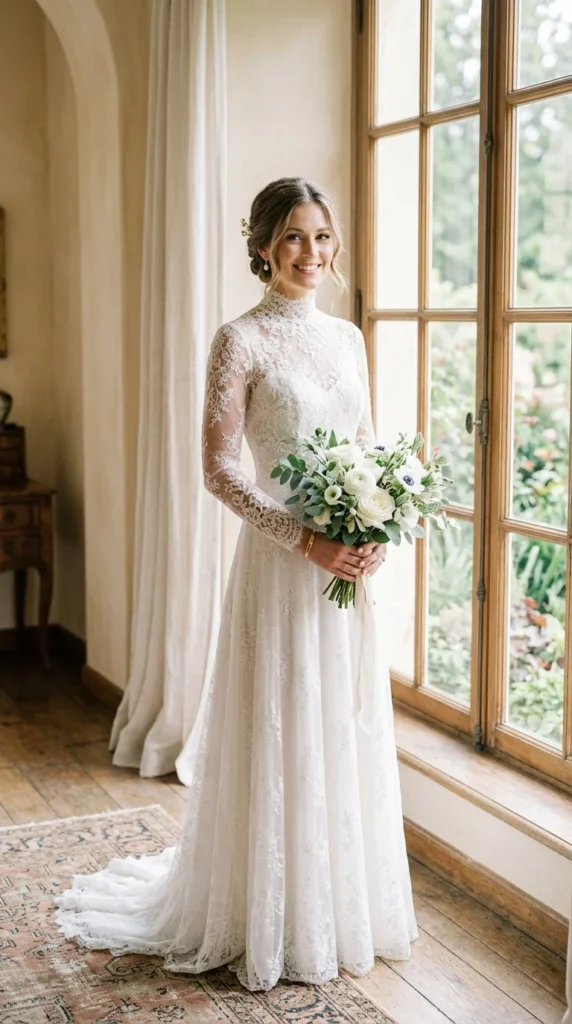
This guide walks you step-by-step through choosing a modest long-sleeve wedding dress that feels fashion-forward, not forced.
Step 1: Start With the Silhouette That Flatters Almost Everyone
If you’re unsure where to begin, begin here: A-line.
Why? Because it solves multiple modesty and comfort problems at once.
- Skims over hips and waist without clinging
- Easy to walk, sit, and dance in
- Naturally temple-ready and church-appropriate
- Works beautifully with long sleeves and high necklines
Designers like Mon Cheri, Maggie Sottero, and Justin Alexander repeatedly feature A-line modest gowns in their collections because it’s universally flattering.
If you try only one shape first, make it A-line.
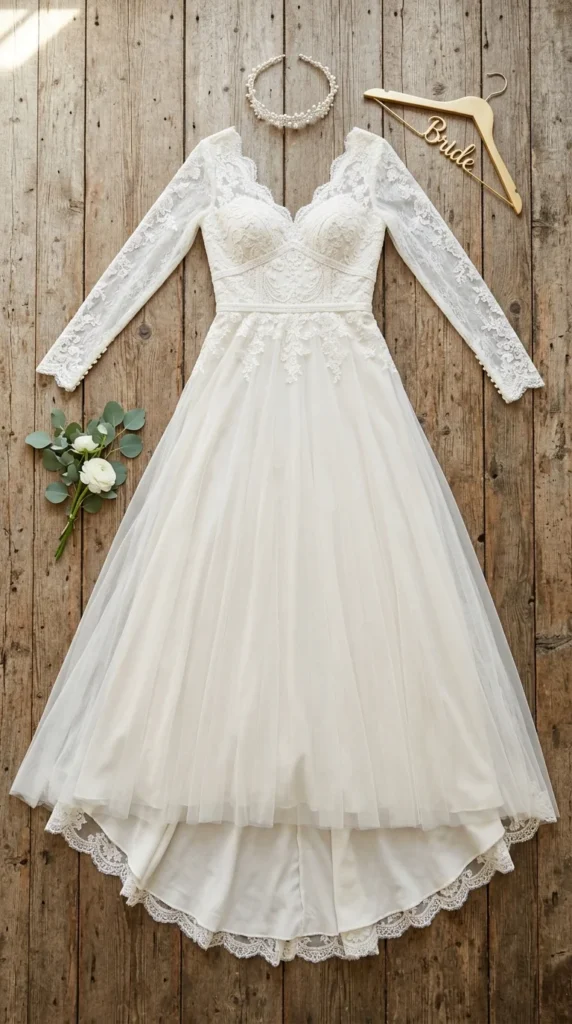
Step 2: Pair the Right Neckline With the Right Sleeves
The most common mistake brides make? Choosing these separately.
The winning formula you’ll see everywhere is:
High neckline + long sleeves + flowing skirt
But there are variations that feel modern:
Best modest neckline options:
- Bateau – elegant and collarbone-highlighting
- Jewel – classic, refined coverage
- Illusion – sheer tulle with lace for a lighter look
- High Victorian-inspired neck – vintage but trending again
Sleeve styles that feel stylish (not stiff):
- Bishop sleeves (soft and romantic)
- Fitted lace sleeves (timeless)
- Puff sleeves (fashion-forward)
- Gauntlet sleeves (dramatic and modern)
The neckline and sleeve must feel like one design, not an add-on.
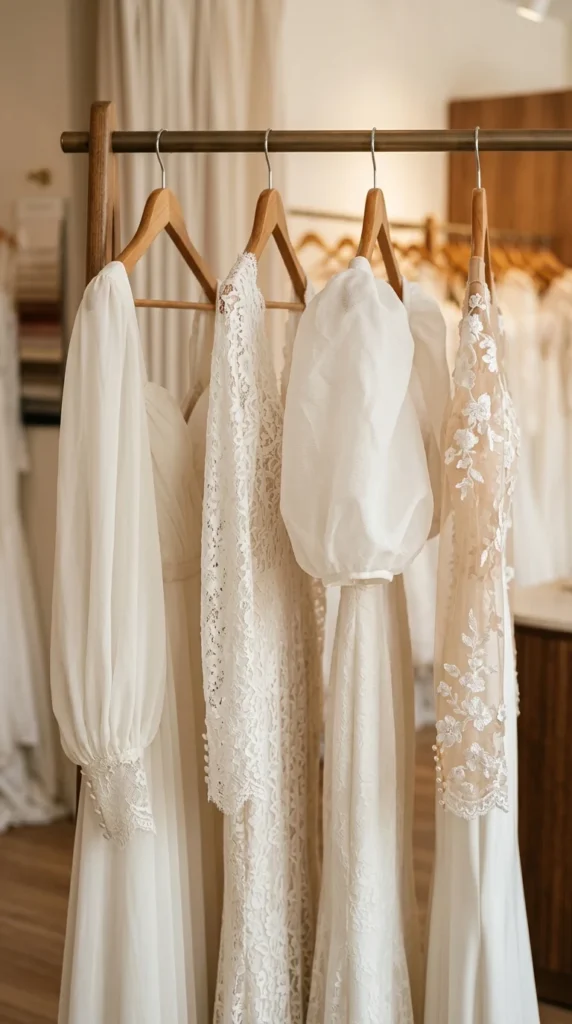
Step 3: Choose Fabrics That Don’t Make the Dress Feel Heavy
Coverage should never equal bulk.
Here’s how fabrics change the entire feel of a modest gown:
| Fabric | Look | Why It Works for Modest Brides |
|---|---|---|
| Lace | Romantic, detailed | Perfect for illusion sleeves and texture |
| Crepe | Clean, modern | Ideal for minimalist modest gowns |
| Satin | Elegant, timeless | Works beautifully with structure |
| Chiffon | Soft, airy | Great for A-line flow without weight |
| Organza | Light but structured | Good for volume without heaviness |
“Modern modest” in 2025 is heavily leaning toward matte crepe and minimalist satin with structured bodices.
Designers like Rebecca Ingram and Studio Levana are known for this clean, covered look.
Step 4: Use Illusion Details for Coverage Without Weight
If you’re worried long sleeves will feel too much, this is your solution.
Look for:
- Illusion lace sleeves
- Illusion necklines
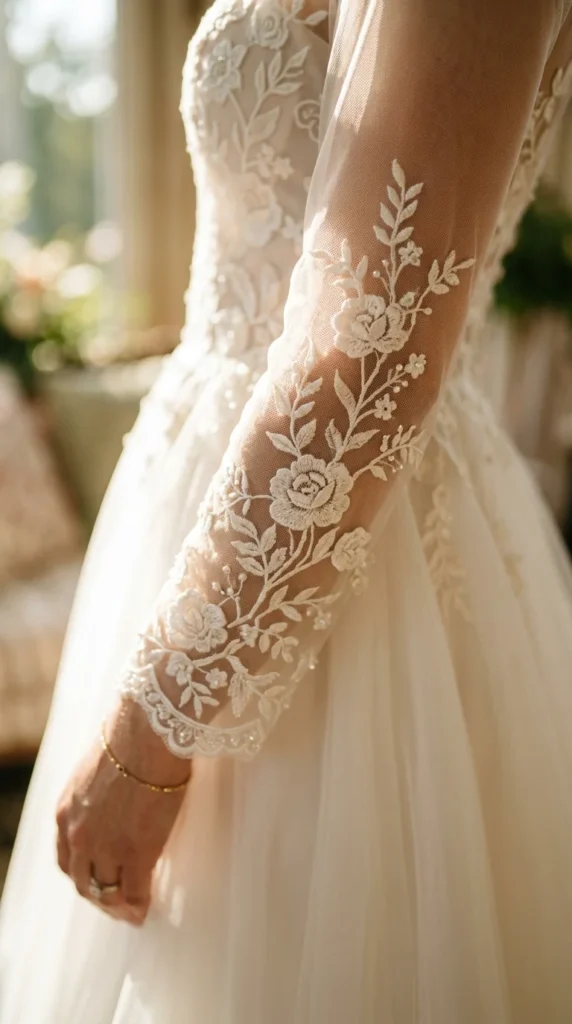
- Tattoo-effect lace on sheer tulle
You stay covered, but the dress looks light, delicate, and intricate instead of solid and heavy.
This is one of the biggest tricks modest bridal collections use today.
Step 5: Consider Detachable Coverage (Ceremony to Reception)
This is highly underrated.
You can have full coverage for the ceremony and a lighter look for the reception with:
- Detachable sleeves
- Boleros
- Bridal shrugs
- Lace toppers or shawls
Many gowns from Sottero & Midgley and boutiques featured on The Knot recommend this approach for modest brides.
It’s practical and stylish.
Step 6: Know What Can (and Cannot) Be Altered
This saves money and frustration.
Easy to modestify:
- Adding lace sleeves to lace gowns
- Raising necklines with illusion lace
- Adding modesty panels to backs
Hard to modestify:
- Turning strapless satin gowns into sleeved gowns
- Adding sleeves to heavily beaded dresses
- Modifying very low backs without ruining structure
If you love a strapless dress, it’s often smarter to find a sleeve-native design instead.
Step 7: Match the Dress to Your Venue and Season
Long sleeves are perfect for:
- Fall and winter weddings
- Temple and church ceremonies
- Outdoor mountain or garden venues
Open backs are still acceptable in modest fashion when balanced with long sleeves and high fronts.
Yes, you can be modest from the front and dramatic from the back.
Step 8: Don’t Ignore Comfort and Support
A modest dress has more fabric. That means structure matters.
Look for:
- Built-in boning
- Structured bodice support
- Comfortable arm movement
- Ability to sit and walk easily
Even mainstream stores like David’s Bridal and Lulus now let you filter long-sleeve and high-neck options so you can test comfort early.
Step 9: If You’re a Temple-Ready or LDS Bride, Start There
Search using terms like:
- Temple-ready wedding dress
- LDS modest wedding gown
Collections built for this audience already meet coverage standards, saving you alteration costs and guesswork.
Final Thoughts
Long sleeves. High necklines. Lace details. Minimalist crepe. These are not compromise features anymore. They are bridal trends.
The key is choosing a gown designed to be modest from the start, not trying to force modesty onto a different style later.
When you pair the right silhouette, neckline, sleeves, and fabric, you get a gown that feels elegant. Timeless. Modern. Romantic.
Save this guide, take it with you to your bridal appointment, and find your perfect gown with confidence.
Leave a Reply