

Morning hair time doesn’t have to end in tears, tantrums, and a brush thrown across the room.
With the right order, a little moisture, and a gentle approach, detangling can turn into a calm, 5-minute routine instead of a daily battle. The secret isn’t strength. It’s a strategy.
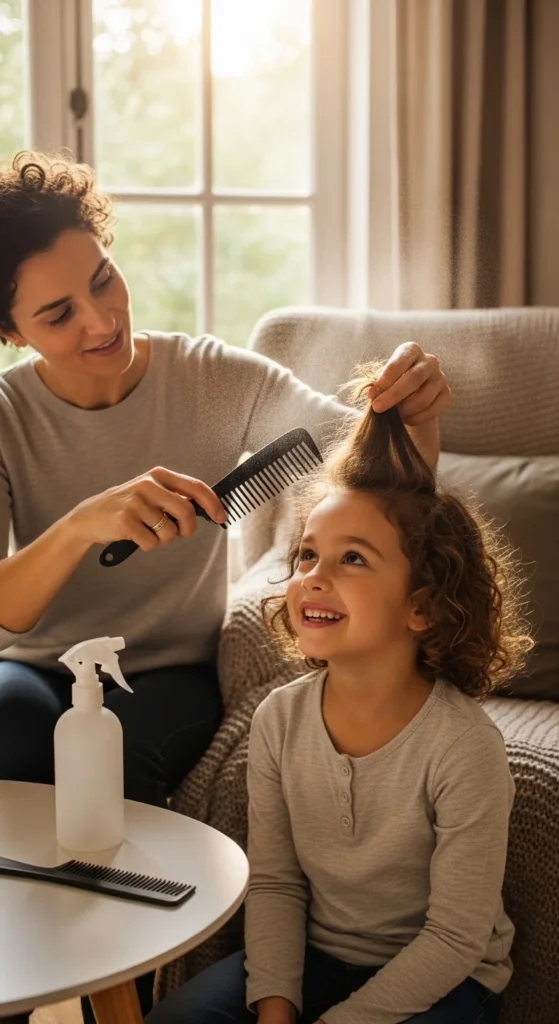
Let’s walk through the exact tear-free routine parents swear by.
The Golden Rule — Start at the Ends and Work Up
This is the single biggest mistake parents make.
Brushing from the roots pulls every knot tighter. Instead, always go bottom up or from the ends to the roots.
How to do it:
- Hold the section of hair above the knot with your hand
- Start brushing the last 2 inches of hair
- Slowly move higher as the ends become smooth
- Keep supporting the hair so there’s no scalp tugging
This one shift alone prevents most pain.
Moisture First — Damp, Not Dripping
Dry brushing is the fastest way to cause tears.
Hair needs to slip before a brush ever touches it.
Best options:
- Light mist of water
- Detangling spray
- Leave-in conditioner
- A few drops of conditioner mixed with water in a spray bottle
You want hair damp but not soaking wet. Wet enough to glide. Dry enough to control.

Section the Hair (This Is Non-Negotiable for Thick or Curly Hair)
Trying to detangle all the hair at once is overwhelming for both of you.
Sectioning turns chaos into control.
Simple section routine:
- Divide hair into 4–6 small sections
- Clip each section
- Work on one section at a time
- Release only when fully detangled
This is especially important for curly, coily, kinky, or very thick hair.
Finger Detangle Before Using Any Tool
Big knots should never meet a brush first.
Your fingers are the safest detangling tool you own.
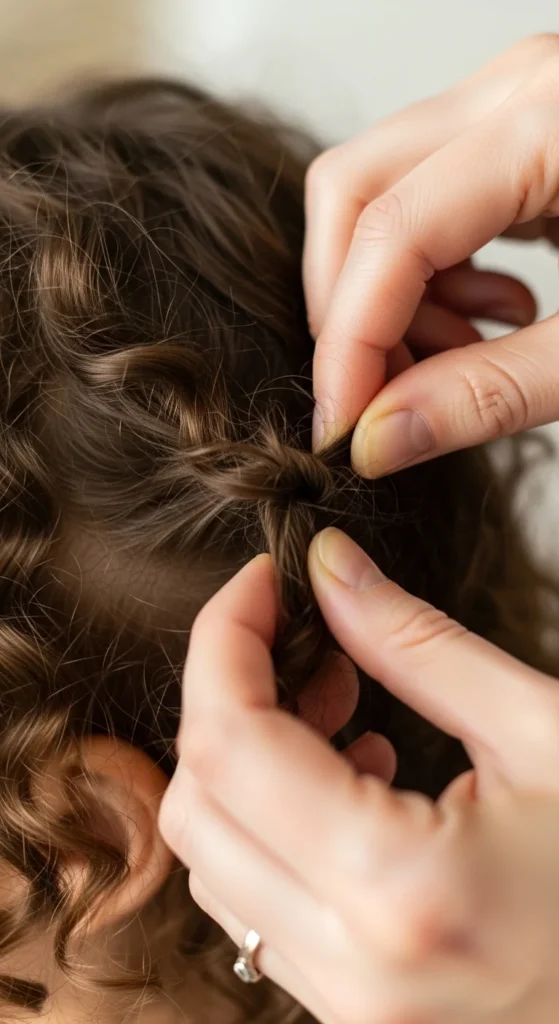
Finger detangling steps:
- Apply spray or conditioner
- Gently pull large knots apart with fingers
- Loosen the tangle before combing
- Be patient here; this step prevents pain later
This “pre-comb checkpoint” saves tears.
H2: Choose the Right Tool (Brush vs Comb)
Not all tools are equal for kids.
Here’s what works best:
| Tool | Best For | Why It’s Gentle |
|---|---|---|
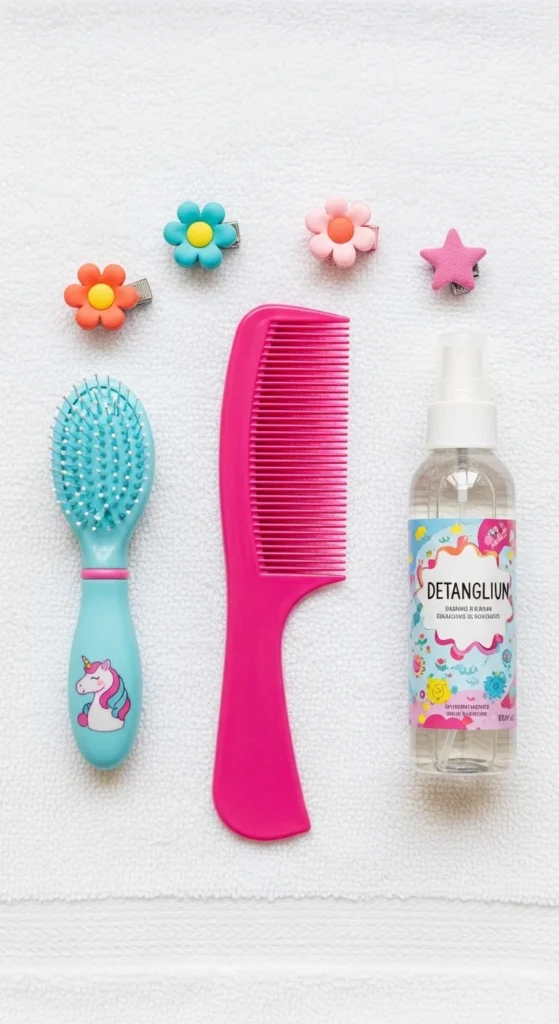
| Wide-tooth comb | First pass detangling | Doesn’t pull tight knots |
| Flexible detangling brush like Wet Brush | Daily routine | Soft, bendable bristles reduce pulling |
| Rounded-tip comb like Ouidad Double Detangler | Curly/textured hair | Glides through sections smoothly |
Many parents love kids’ versions from brands like Tangle Teezer because the bristles flex instead of fight the hair.
The 5-Minute Step-by-Step Tear-Free Routine
This is where everything comes together.
Step 1: Mist hair until damp
Step 2: Apply detangling spray or leave-in
Step 3: Section hair and clip
Step 4: Finger detangle big knots
Step 5: Comb ends to roots
Step 6: Finish with a gentle brush pass
That’s it. No drama. No rushing. No pulling.
How to Avoid Pulling at the Scalp
Pain happens when tension travels to the roots.
Always:
- Hold the hair above where you’re brushing
- Work in tiny sections
- Move slowly
- Stop if you feel resistance and add more moisture
If it feels hard for you, it hurts for them.
Make It a Calm, Positive Routine (Behavior Hacks That Work)
Detangling isn’t just hair care. It’s a parenting moment.
Try:
- Letting them hold a toy
- Singing a song
- Using a calm voice
- Offering hugs between sections
- Doing hair near natural light instead of harsh bathroom lights
Many parents find that this becomes bonding time instead of a fight.

When to Detangle — Wet Hair vs Dry Hair
After bath: Best time. Hair is already damp and conditioned.
Before washing: Use extra spray and patience.
Very dry hair: Never brush without adding moisture first.
Routine detangling every day prevents major knots from forming.
Rescue Routine for Matted or Very Tangled Hair
If you’re facing a serious knot or matted section, don’t panic and don’t cut.
Rescue steps:
- Soak the section with conditioner or detangling spray
- Let it sit for 3–5 minutes
- Use fingers to slowly break it apart
- Use a wide-tooth comb from the ends
This slow approach saves hair and avoids tears.
Quick Hair-Texture Decision Guide
Different hair types need slightly different focus:
- Straight hair: Focus on moisture and ends-to-roots
- Wavy hair: Sectioning helps prevent hidden knots
- Curly hair: Finger detangling is essential
- Coily/kinky hair: Small sections + lots of slip
- Thick hair: Clips and patience are key
One method does not fit all.
What NOT to Do (Common Mistakes)
Avoid these, and detangling becomes much easier:
- Brushing dry hair
- Starting from the roots
- Rubbing hair hard with a towel
- Trying to detangle all the hair at once
- Rushing because they won’t sit still
Slow is fast here.
Takeaway
A tear-free routine isn’t about magic products. It’s about order, moisture, sectioning, and gentleness.
Once you follow this system, hair time becomes a calm 5-minute habit instead of a daily struggle.
Save this routine for later and try it at the next hair session.

Leave a Reply